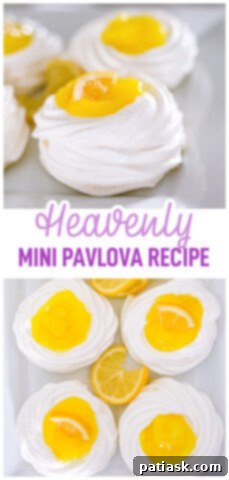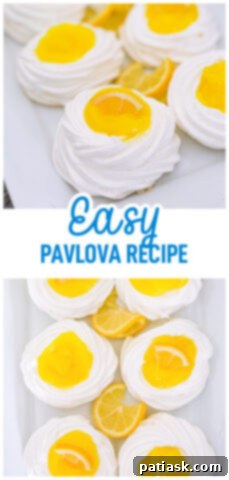
Easy Pavlova Recipe: Your Ultimate Guide to a Cloud-Like, Elegant Dessert
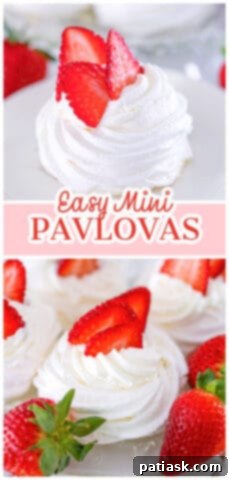
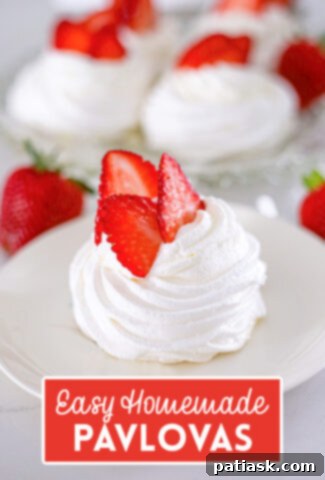
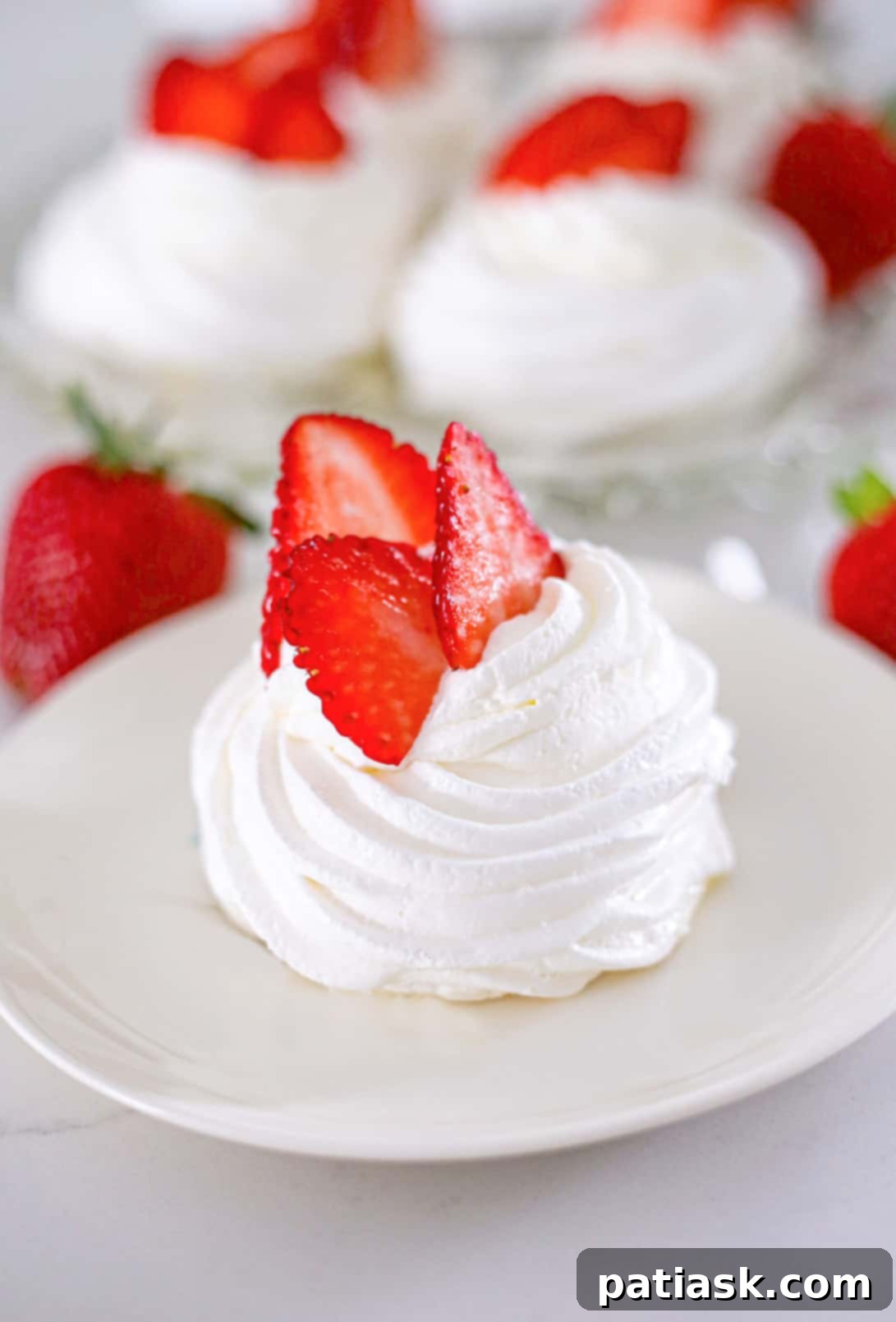
Embark on a delightful culinary journey with this easy pavlova recipe, designed to bring the magic of a show-stopping dessert right into your kitchen. If you adore the contrast of a crisp, delicate meringue shell giving way to a soft, marshmallowy interior, then look no further! This homemade treat is not only enchanting but also surprisingly simple to master, making it the perfect centerpiece for any special occasion. With holidays like Easter and Mother’s Day approaching, a beautifully crafted Pavlova promises to be a heavenly delight that will impress every guest.
Looking for more exquisite dessert inspirations? Explore our collection of 75 Heavenly Chocolate Dessert Recipes, discover the refreshing 25 Slices of Summer Heavenly Desserts, or browse through these 25 Heavenly Desserts for a taste of pure bliss.
The Enchanting History of Pavlova
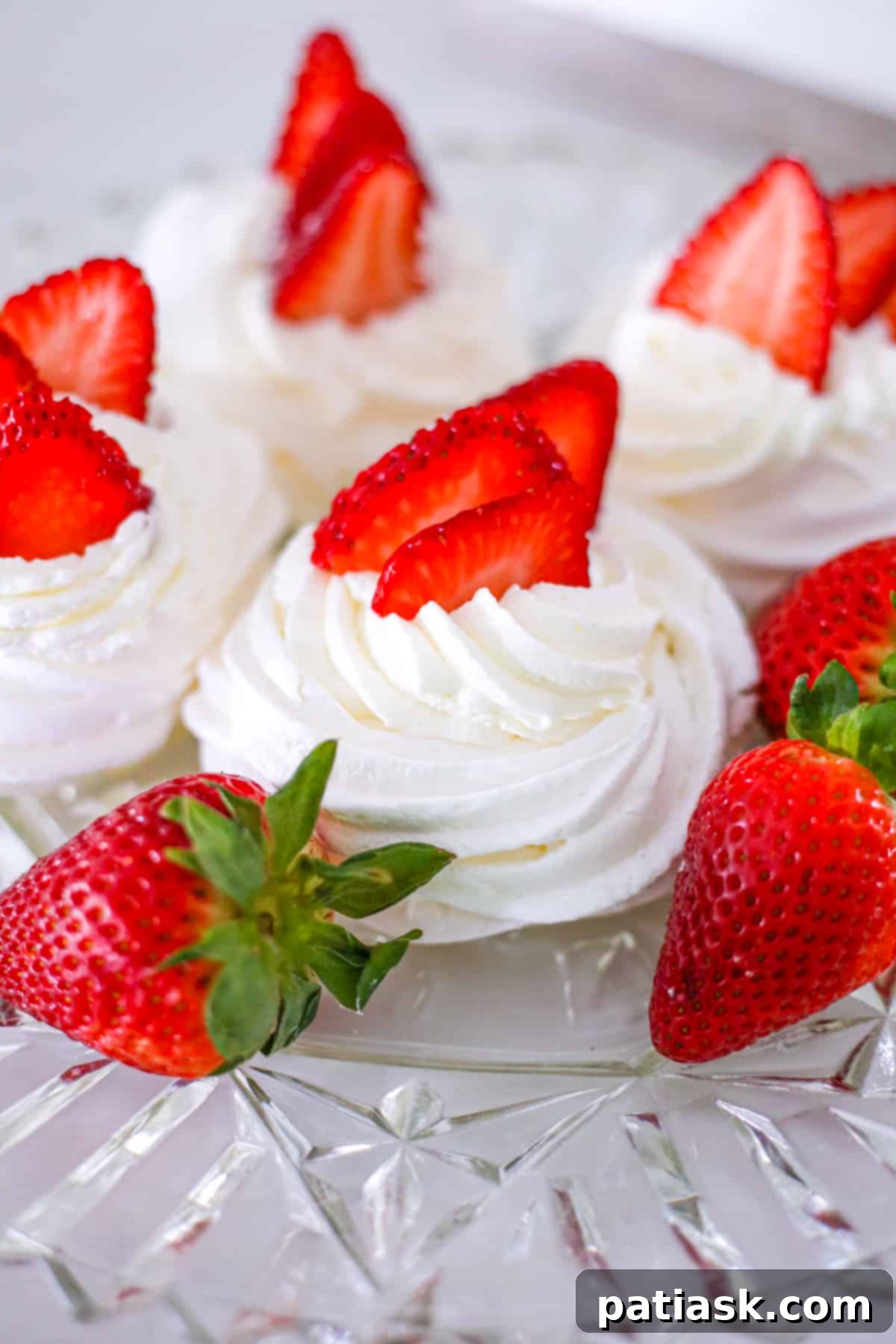
The Pavlova, a dessert as graceful as the ballerina it’s named after, holds a sweet and intriguing history. Originating in either Australia or New Zealand during the early 20th century, this elegant confection was created in honor of the renowned Russian prima ballerina Anna Pavlova during one of her tours. Its creation sparked a friendly rivalry between the two nations, both claiming to be the birthplace of this iconic dessert. Regardless of its exact origins, the Pavlova quickly captured hearts with its ethereal appearance and delightful texture.
At its core, Pavlova is a masterpiece crafted from simple ingredients: whipped egg whites and sugar. The baking process transforms these into a delectable meringue cake with a uniquely dual texture. The exterior bakes to a perfect crispness, providing a delicate crunch, while the interior remains wonderfully soft and chewy, reminiscent of a gourmet marshmallow. This delightful contrast is what makes Pavlova a truly memorable and satisfying treat, fulfilling sweet cravings in the most charming way. Indulge in this graceful creation, and your taste buds will thank you for the sublime experience.
Pavlova vs. Meringue: Understanding the Delicious Distinction
While often grouped together, Pavlova and traditional meringue, though sharing core ingredients like whipped egg whites and sugar, possess distinct characteristics that set them apart. Understanding these differences is key to appreciating the unique charm of a Pavlova.
The defining feature of a Pavlova is its captivating textural interplay: a delicate, crispy shell that yields to a remarkably soft, pillowy, marshmallow-like center. This contrasts sharply with typical meringues, which are usually baked until they are dry and crisp all the way through, offering a uniform snap from edge to center.
To achieve the signature Pavlova texture, the baking process is crucial. It involves a slow bake at a low temperature, typically for 45 to 90 minutes depending on the recipe’s scale, followed by an extended period of cooling inside the switched-off oven. This gentle baking and gradual cooling allow the exterior to dry out and crisp up beautifully, while the trapped moisture in the center creates that desired fluffy consistency. Many recipes incorporate a small amount of cornstarch, which acts as a stabilizer and helps absorb excess moisture, contributing to the perfect dry exterior and plush interior. This careful balance ensures the Pavlova achieves its iconic structure and mouthfeel, making it a truly distinct and beloved dessert.
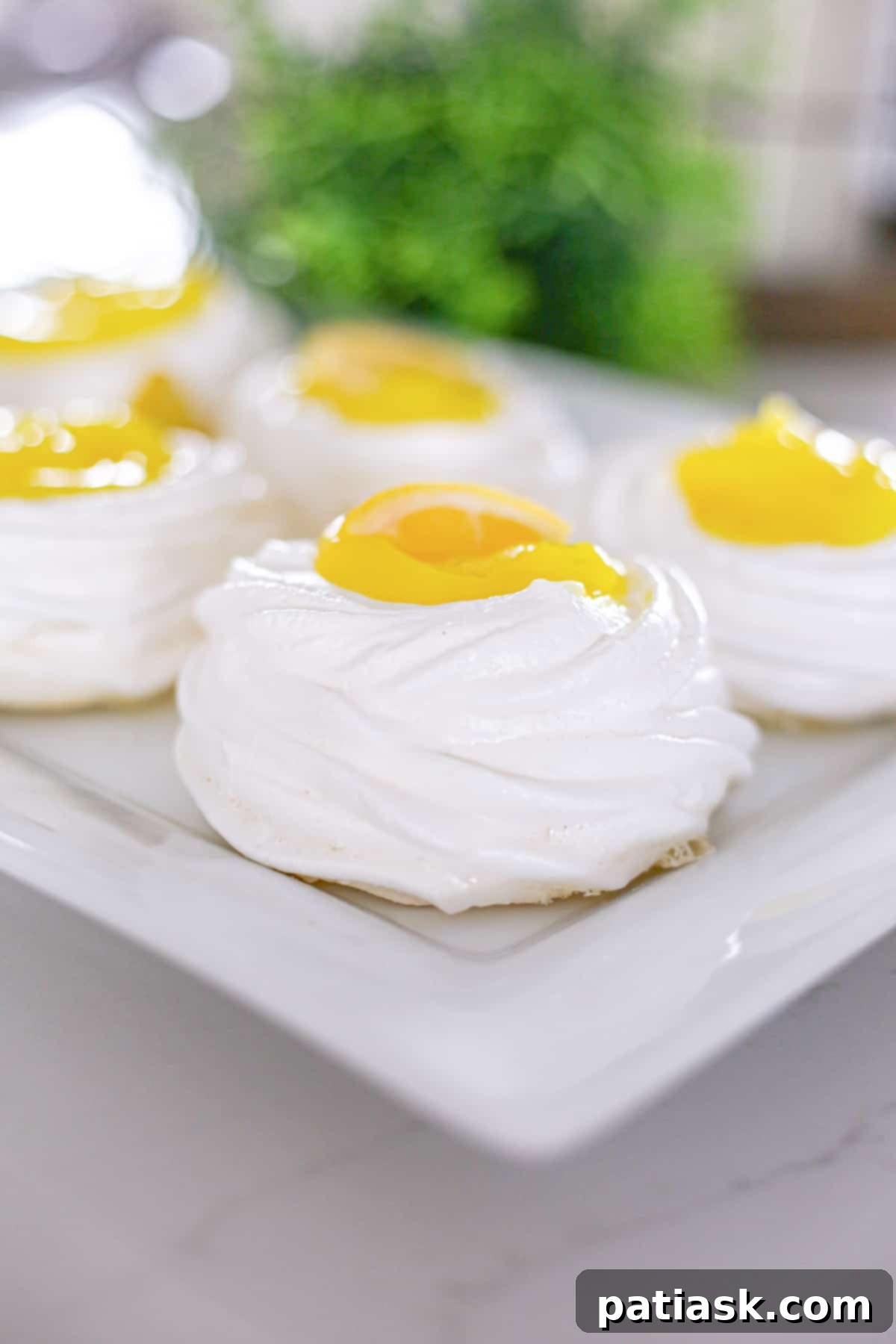
Why You’ll Adore This Easy Pavlova Recipe
This particular Pavlova recipe is designed for both seasoned bakers and eager beginners, promising a delightful experience and impressive results. Here’s why we know you’ll fall in love with it:
- Surprisingly Simple to Make: Despite its elegant appearance, Pavlova is much easier to create than you might imagine. Comprising primarily egg whites and sugar, the process largely involves whipping these ingredients to perfection. While a stand mixer is highly recommended for its efficiency, as the egg white and sugar mixture requires about 10 minutes of continuous whipping, the overall steps are straightforward and manageable.
- Foolproof Perfection: This recipe is crafted to be practically foolproof. By diligently following the instructions, you’ll consistently achieve that ideal balance of a crispy exterior and a heavenly marshmallowy interior. Mastering the perfect Pavlova has never been more accessible!
- Elegant, Fun, and Intriguing: Pavlova stands out as a dessert that is both sophisticated and playful. Its cloud-like appearance and delightful texture make it an intriguing treat that never fails to impress. And, of course, it’s absolutely delicious!
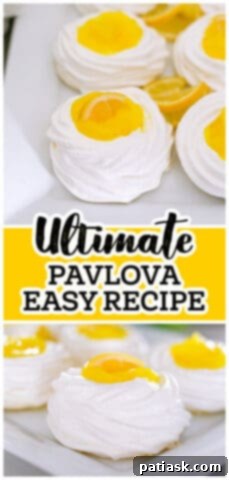
- Versatile Filling Options: The beauty of Pavlova lies in its adaptability. The delicate meringue shell provides a perfect canvas for a myriad of fillings. Get creative by filling the centers with tangy lemon curd, rich puddings, light mousses, an abundance of fresh fruits, luxurious whipped cream, or any combination that sparks your culinary imagination.
- Maximize Your Ingredients: Don’t let those egg yolks go to waste! This recipe encourages mindful cooking by suggesting you use your leftover egg yolks to create a batch of Easy Homemade Lemon Curd. Not only does this reduce waste, but it also provides a fantastic topping for your Pavlova desserts, adding a burst of vibrant flavor.
- Perfect for Any Occasion: Whether it’s a festive holiday gathering, a casual dinner party, or a grand celebration, Pavlova is the ideal dessert to impress friends, family, or even royalty! Its stunning presentation and exquisite taste guarantee it will be a memorable dish.
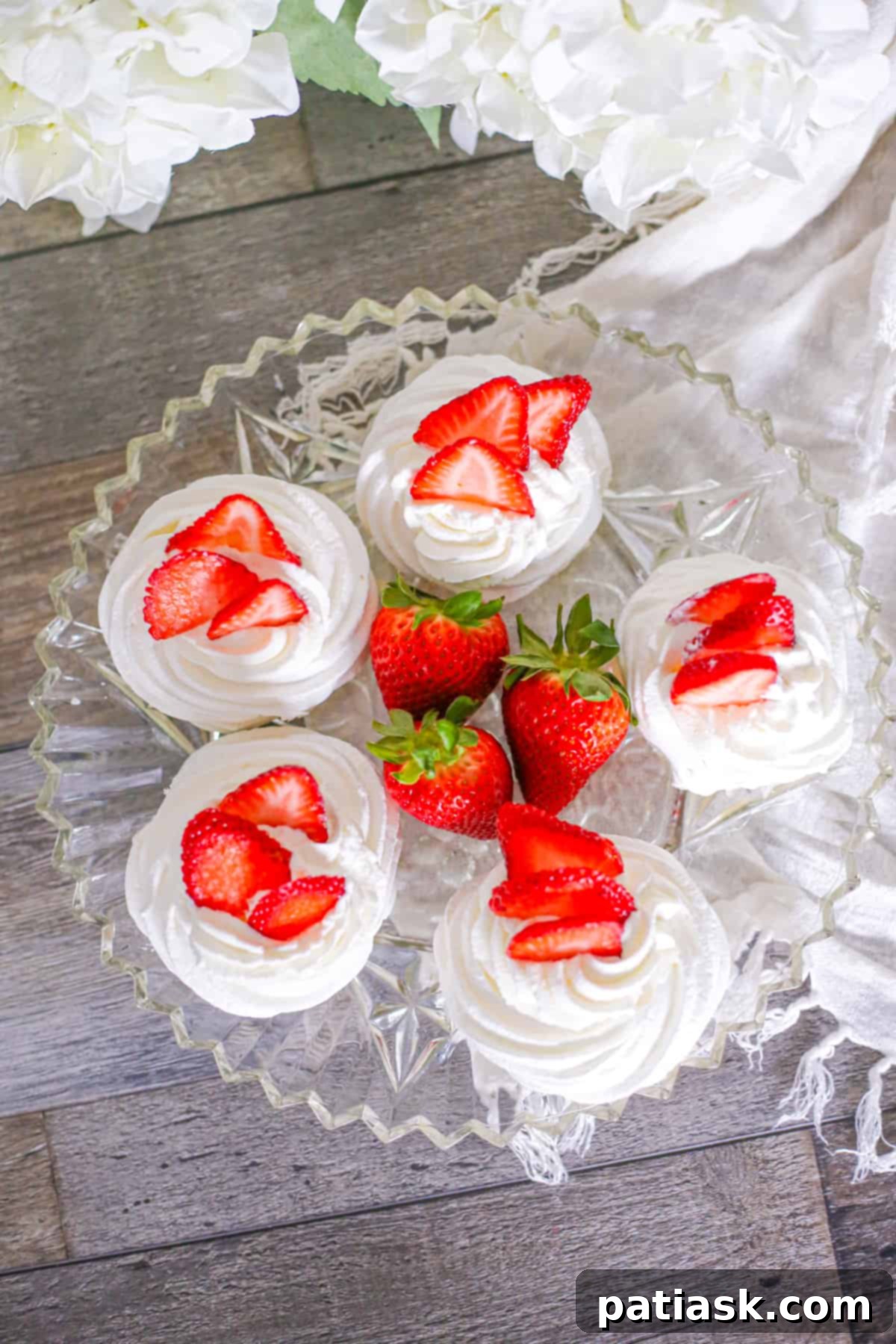
Essential Ingredients for Your Heavenly Pavlova
For the Pavlova Meringue:
- 6 large egg whites: For optimal whipping, ensure your egg whites are at room temperature. This allows them to whip faster and achieve greater volume and stability.
- 1 1/2 cups granulated sugar or superfine sugar: Superfine sugar dissolves more easily into egg whites, resulting in a smoother meringue. If you only have granulated sugar, you can pulse it a few times in a food processor to create smaller crystals. Both will yield amazing results, so use what you have!
- 2 teaspoons cornstarch: This is a key ingredient for achieving the Pavlova’s signature marshmallowy interior and helps stabilize the meringue, preventing collapse.
- 1/2 tablespoon lemon juice: A touch of acid, like lemon juice, helps stabilize the egg whites, ensuring they whip up to stiff, glossy peaks.
- Optional: 1/2 tablespoon vanilla extract: For an added layer of aromatic sweetness.
For the Fresh Whipped Cream:
- 1 1/2 cups heavy whipping cream: Crucially, ensure your cream is very cold. Cold cream whips up faster and holds its shape better.
- 2-3 tablespoons powdered sugar or granulated sugar: Powdered sugar provides a smoother texture, but granulated sugar works just as well. Adjust to your desired sweetness.
Delicious Additional Toppings (Get Creative!):
- 4-5 cups fresh fruit of choice: The vibrant colors and flavors of fresh fruit perfectly complement Pavlova. Think strawberries, cherries, blueberries, raspberries, kiwi, blackberries, or the exotic tang of passionfruit.
- Lemon curd, mousses, puddings, or pie fillings: These add a creamy, flavorful layer beneath or mixed with the fruit. For example, Lucky Leaf Lemon Fruit Filling (as used in the original recipe) can provide a convenient and tasty option.
- Sweet sauces: Drizzle with strawberry, raspberry, or chocolate sauce for an extra touch of decadence.
- Garnishes: Elevate your presentation with delicate chocolate shavings, bright lemon wedges, fresh mint leaves, or even edible florals.
Step-by-Step: Crafting Your Easy Pavlova
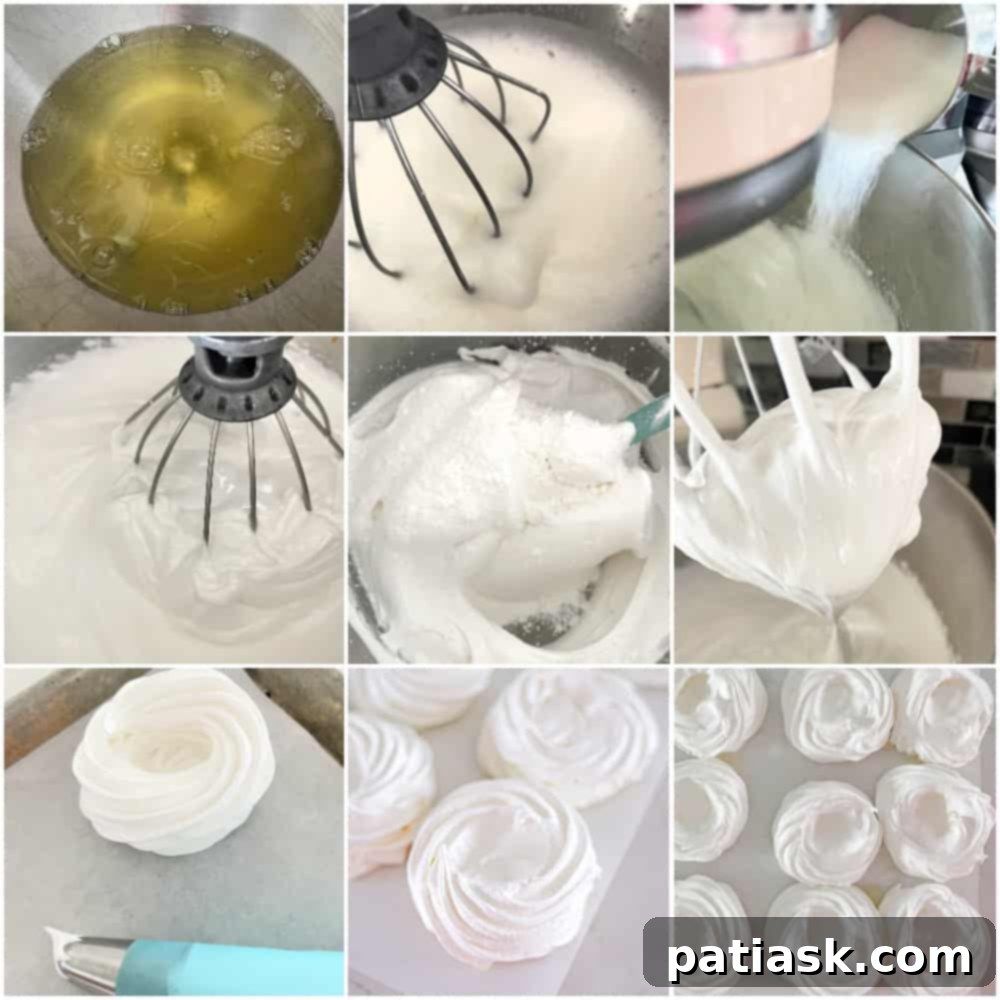
- Prepare Your Meringue Base: Preheat your oven to 225˚F (107˚C) and line a large baking sheet with parchment paper. In the clean bowl of your stand mixer, beat the room-temperature egg whites on high speed for 1-2 minutes until they form soft peaks. With the mixer still running, gradually add the 1 1/2 cups of sugar, a tablespoon at a time, over the course of 7-10 minutes. Continue beating on high speed until you achieve beautiful, stiff, and glossy peaks, ensuring the sugar is fully dissolved. To check for dissolved sugar, rub a small pinch of the meringue mixture between your fingers; if you don’t feel any gritty sugar grains, you’re ready for the next step. If you do, continue mixing until smooth.
- Incorporate Flavor and Structure: Gently mix in the lemon juice and optional vanilla extract. Then, fold in the cornstarch until it is just blended. Be careful not to overmix, as this can deflate the meringue.
- Shape and Bake Your Pavlova Nests: Using a large star tip and a piping bag, pipe 3 to 3 1/2 inch circles of meringue onto the prepared parchment paper. You can also spoon the meringue into circles and create a slight well in the center with the back of a spoon to hold your fillings later. Bake at 225˚F (107˚C) for 1 hour and 15 minutes. After baking, turn off the oven completely but leave the meringues inside for an additional 30 minutes to cool slowly and dry out. This crucial step helps prevent cracking and ensures the perfect crisp exterior while maintaining the plush, marshmallow-like interior.
- Cool and Store: Carefully transfer the pavlovas, still on the parchment paper, to a countertop or a wire cooling rack to cool completely to room temperature. Once cooled, they are ready for assembly! If not serving immediately, store the cooled Pavlova shells in an airtight container at room temperature in a low humidity environment for up to 3-5 days. Do not refrigerate, as this can make them sticky.
Whipping Up Fresh Cream and Assembling Your Pavlova
How to Make Fresh Whipped Cream:
- Using a mixer fitted with a whisk attachment, beat the very cold heavy whipping cream with the powdered or granulated sugar. Beat on medium-high speed for 3-5 minutes until the cream is light, fluffy, and forms stiff peaks that are pipeable. Be careful not to overbeat, or you’ll end up with butter!
How to Assemble Your Pavlova with Toppings:
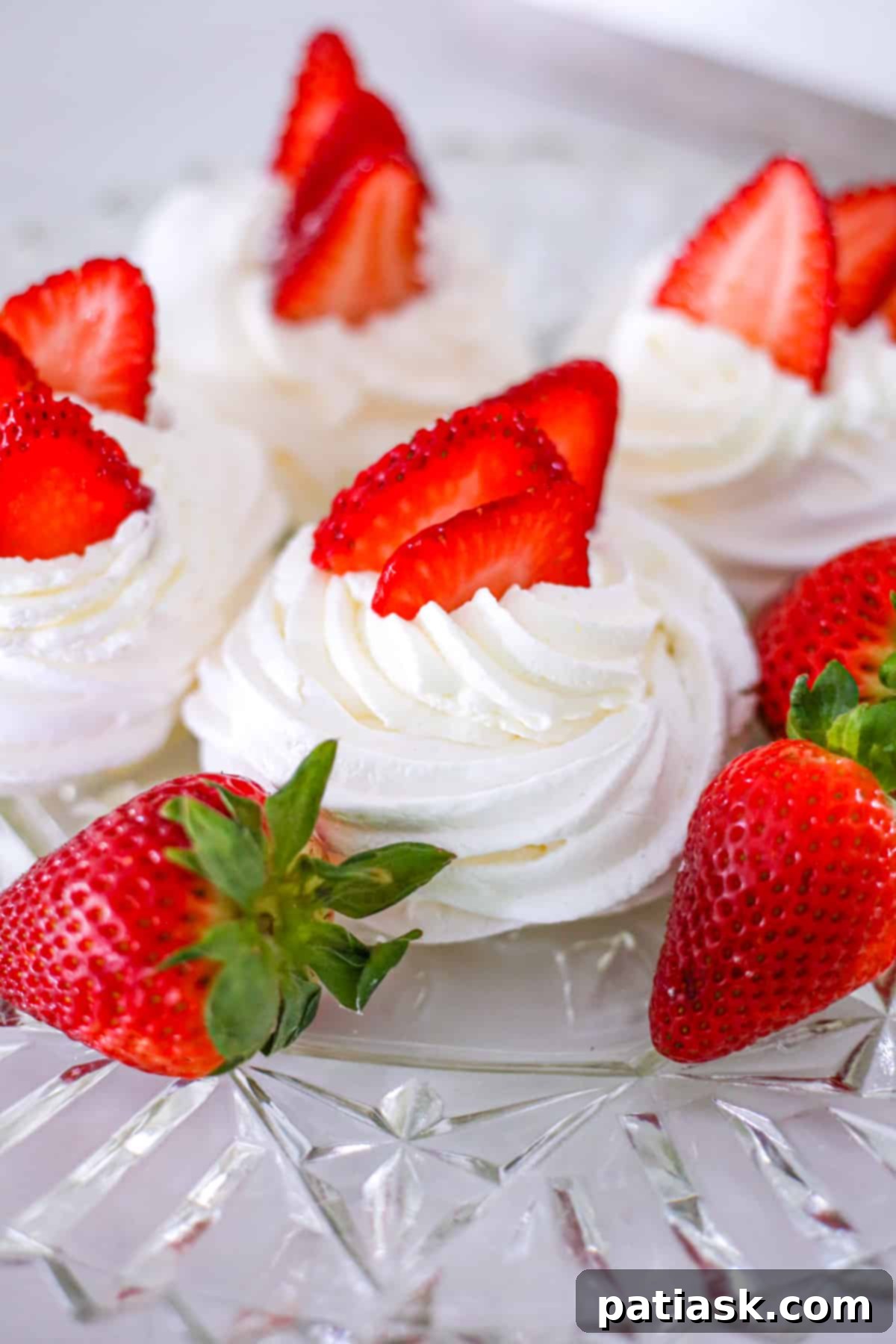
- Once your Pavlova shells are cool, pipe or spoon a generous dollop of fresh whipped cream into the center of each.
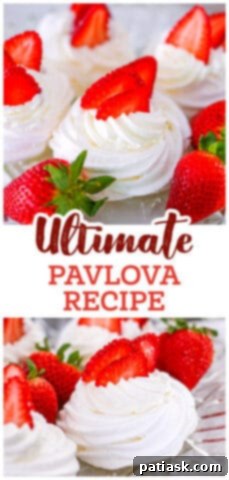
- Now for the fun part: customize your pavlovas! Arrange your favorite fresh fruits on top of the whipped cream. You can also add drizzles of fruit sauces, spoonfuls of lemon curd, or chocolate shavings for extra flair.
- Serve your assembled Pavlovas within 4 hours for the best texture and freshness. If you’re preparing ahead, store the unfilled Pavlova shells and whipped cream separately, then assemble just before serving to maintain crispness.
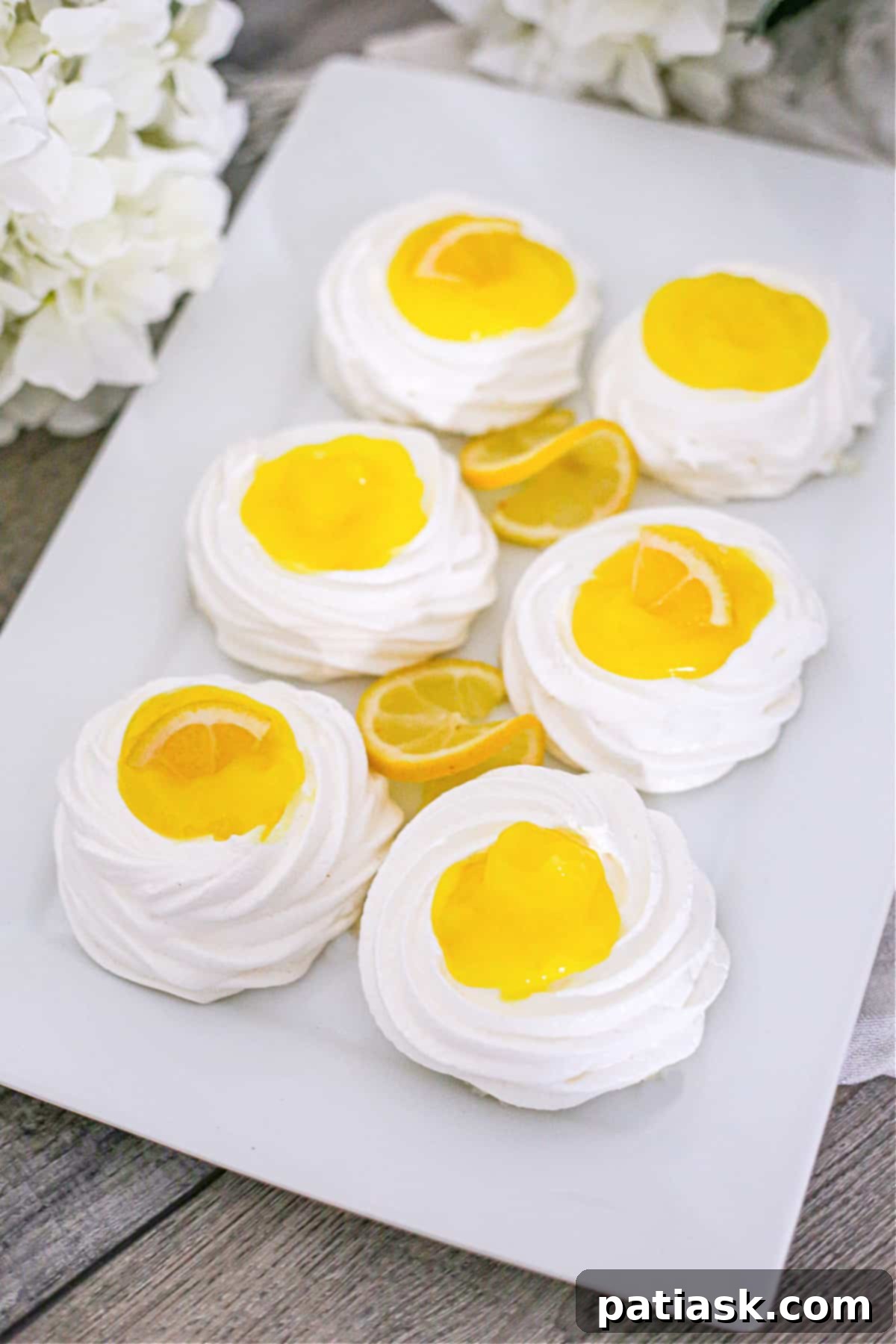
Expert Tips for a Perfectly Flawless Pavlova
Achieving a perfect Pavlova is within reach with a few key considerations:
- Preheat Thoroughly: A major key to success is to fully preheat your oven before placing the meringue inside. This ensures a stable baking environment from the start, crucial for a light, airy, and delicious Pavlova. If the oven isn’t hot enough, the delicate meringue can begin to melt or form an undesirable layer of brown sugar at the bottom. So, don’t delay – preheat and bake right away for that heavenly Pavlova experience!
- Room Temperature Egg Whites are Essential: Always use egg whites that have come to room temperature. They will whip up faster, achieve greater volume, and create a more stable meringue than cold egg whites.
- Don’t Waste Those Yolks! After separating your eggs, don’t discard the yolks! Use them to make a batch of Homemade Lemon Curd (Microwave) – it’s a fantastic topping for your Pavlova!
- Parchment Paper is Your Best Friend: Always line your baking sheet with parchment paper. This is absolutely critical for effortless removal and to prevent any sticky disasters. Never use wax paper, as it can stick to the meringue during baking.
- The Power of Your Mixer: For the perfect Pavlova, a sturdy stand mixer is your secret weapon. It provides consistent, high-speed whipping. If you’re using an electric hand mixer, be prepared to mix for an additional 2-3 minutes to achieve those coveted stiff, smooth, and glossy peaks. Whatever you do, resist the temptation to hand whisk – it’s incredibly labor-intensive and rarely yields the desired results!
- Ensure Sugar is Fully Dissolved: When whipping the egg whites and sugar, it’s vital that the sugar crystals fully dissolve into the egg whites. For ultimate assurance, take a small pinch of the meringue mixture and rub it between your fingers. If you don’t feel any gritty grains, you’re good to go. If you do, just keep mixing for a few more minutes until they disappear completely. Undissolved sugar can lead to a sticky or weeping meringue.
- Sugar Choice Matters (Slightly): You can absolutely use regular granulated sugar (this recipe uses it successfully). However, if you desire easier dissolving, superfine sugar is a great alternative. If you only have granulated, simply place it in a food processor and pulse it several times to create smaller sugar crystals. Easy-peasy!
- Cool Down in the Oven: Once the baking time is complete, it is crucial to leave the Pavlovas in the switched-off oven for an additional 30 minutes, or even longer. Do not open the oven door during this time. This slow cooling process helps them to dry out further and prevents them from cracking or collapsing due to a sudden change in temperature. Think of it like baking a cheesecake – no peeking until the timer is truly done!
Frequently Asked Questions About Pavlova
Here are answers to some common questions about making and enjoying Pavlova:
Q: Can I make Pavlova ahead of time?
A: Absolutely! The unfilled Pavlova shells can be made 3-5 days in advance. Store them in an airtight container at room temperature in a low-humidity environment. Avoid refrigerating, as humidity can make them sticky. Assemble with whipped cream and fruit just before serving for the best texture.
Q: What causes Pavlova to crack?
A: Cracking is usually due to sudden temperature changes. Ensure your oven is fully preheated, and most importantly, let the Pavlovas cool completely inside the oven after baking with the door closed. Opening the oven too soon can cause them to contract rapidly and crack.
Q: How do I know when my meringue is whipped enough?
A: You’re looking for stiff, glossy peaks. When you lift the whisk, the meringue should hold its shape firmly. The sugar should also be completely dissolved; test this by rubbing a small amount between your fingers – it should feel smooth, not grainy.
Q: Can I use egg substitutes?
A: Pavlova relies heavily on the structural integrity of egg whites. While some vegan meringue recipes exist using aquafaba (chickpea brine), they may yield a slightly different texture. For this classic recipe, fresh egg whites are recommended.
Q: What are the best toppings for Pavlova?
A: The possibilities are endless! Fresh berries (strawberries, raspberries, blueberries) are classic. Other popular choices include kiwi, passionfruit, mango, or stone fruits. Pair them with whipped cream, lemon curd, chocolate sauce, or fruit purees for an extra layer of flavor.
Q: Why is my Pavlova sticky?
A: Stickiness can result from undissolved sugar, baking at too low a temperature for too short a time, or exposure to humidity. Ensure your sugar is fully dissolved, bake as directed, and store in a dry, airtight container.
In conclusion, creating a delicious Pavlova doesn’t have to be intimidating. By following these straightforward steps and helpful tips, anyone can bake a truly show-stopping dessert that will delight family and friends. Remember to pay close attention to the details of whipping, baking, and cooling, and don’t hesitate to experiment with various toppings and flavors to make it uniquely yours.
So, what are you waiting for? Grab your egg whites, fire up your mixer, and get ready to master this incredibly easy Pavlova recipe! It’s naturally gluten-free too, making it a wonderful option for many dietary needs.
More Heavenly Desserts to Explore!
- Chocolate Eclair Cake
- 20 Snickers Dessert Roundup
- Strawberry Explosion Cheesecake Trifle Desserts
- 80+ Best Homemade Frosting Flavor Recipes
- 35 Festive Homemade Easter Treats
- Original Copycat Shoney’s Strawberry Pie
- M&M Marshmallow Bars
- Homemade Lemon Brownies
Easy Pavlova Recipe
Author: Kim Lange
Experience the delight of homemade Easy Pavlova. With its soft marshmallow & crispy meringue, this elegant pavlova recipe is heavenly!
Prep Time: 15 mins
Cook Time: 1 hr 30 mins
Resting Time in Oven: 30 mins
Course: Dessert
Servings: 15 Servings
Ingredients for Pavlova
PAVLOVA RECIPE
- 6 large egg whites (room temperature works best and will whip faster than cold egg whites.)
- 1 ½ cups granulated sugar or superfine sugar (Tip: Superfine sugar dissolves better into the egg whites than granulated, so you can pulse granulated sugar a few times in a food processor to reduce the size of the crystals if you wish, either way, they will be amazing regardless if you use granulated or superfine!)
- 2 teaspoons cornstarch
- ½ tablespoon lemon juice
- Optional: 1/2 tablespoon vanilla extract
FRESH WHIPPED CREAM
- 1 ½ cups heavy whipping cream (make sure it’s very cold)
- 2-3 tablespoons powdered sugar or granulated sugar
ADDITIONAL TOPPINGS
- 4-5 cups fresh fruit of choice (strawberries, cherries, blueberries, raspberries, kiwi, blackberries, passionfruit)
- Lemon curd, mousses, puddings, homemade or premade canned pie fillings (I used Lucky Leaf Lemon Fruit Filling for my lemon topped pavlovas)
- Sauces like strawberry, raspberry or chocolate
- Chocolate shavings, lemon wedges, mint leaves, florals
Instructions
How to Make Pavlova
- Begin by preheating your oven to 225˚F and lining a large baking sheet with parchment paper. Then, use your trusty stand mixer to beat egg whites on high speed for 1-2 minutes, until soft peaks form. As the mixer continues to work its magic, gradually add in 1 & 1/2 cups of sugar and beat for an additional 7-10 minutes on high speed. You should get beautiful, stiff peaks and a smooth, glossy texture with fully dissolved sugar. For the ultimate assurance, take a pinch of the meringue mixture and rub it between your fingers. If you don’t feel any grains, you’re good to go. If you do, just keep mixing until they disappear.
- Quickly mix in lemon juice/vanilla extract, then fold in the cornstarch and mix until well blended.
- Create perfect pavlova nests by piping 3-3 1/2 inch circles of meringue onto parchment paper using a large star tip. Gently indent the centers with a spoon to make room for the delicious cream filling. Bake at 225˚ for 1 hour and 15 minutes, then turn off the oven and leave the meringue inside for an additional 30 minutes. The outer layer will be delightfully crisp to the touch, while the inside remains plush and marshmallow-like in texture.
- Transfer the pavlovas on the parchment paper to the counter or a cookie rack to cool to room temperature. Once cooled, the real fun begins – top it with whipped cream and your favorite fruits. Otherwise, store them in an airtight container for 3-5 days at room temperature in a low humidity place.
How to Make Whipped Cream and Assemble Pavlovas
- Using a mixer, beat whipping cream with sugar until whipped for 3-5 minutes and becomes pipeable.
- Pipe whipped cream onto each of the pavlovas.
- You can customize it with your favorite fruits, sauces, and toppings. Serve within 4 hours after assembling, or store without whipped cream and toppings in an airtight container for up to 3 days and then fill them before serving.
Keyword: egg whites, fruit, marshmallow, meringue, pavlova, whipped cream
Tried This Recipe?
Let us know how it was by commenting below!
Recipe adapted from Natasha’s Kitchen